
ADHD and How it Functions

Attention-Deficit/Hyperactivity Disorder (ADHD) is often misunderstood. Many people associate ADHD with childhood or assume it only involves being distracted or hyperactive. In reality, ADHD is a neurodevelopmental condition that affects both children and adults, influencing attention, emotional regulation, organization, motivation, and daily functioning.
What Is ADHD?
ADHD is a neurodevelopmental condition characterized by ongoing patterns of inattention, impulsivity, and/or hyperactivity that interfere with daily life. ADHD is not caused by laziness, lack of discipline, or poor motivation.
Common ADHD symptoms in adults may include:
Difficulty focusing or sustaining attention
Feeling mentally restless or overwhelmed
Trouble with organization, time management, or follow-through
Forgetfulness or losing important items
Emotional sensitivity or difficulty regulating emotions
Procrastination followed by periods of intense hyperfocus
ADHD can look very different from person to person. Many adults are not diagnosed until later in life, often after years of feeling frustrated, misunderstood, or burned out.
How ADHD Affects the Brain
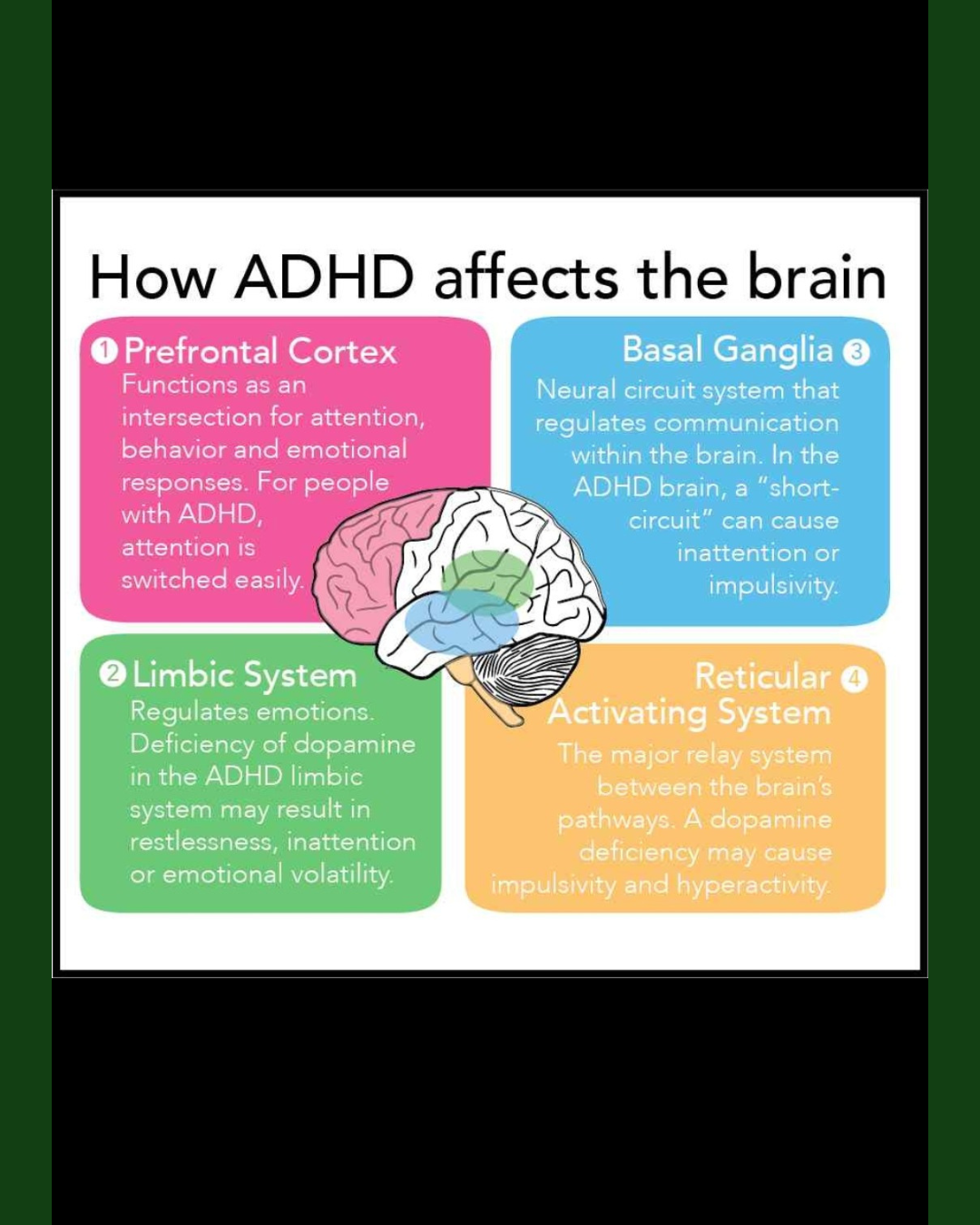
Research shows that ADHD involves differences in brain regions related to attention, executive functioning, and dopamine regulation. Dopamine plays a key role in motivation, reward, and focus — which helps explain why people with ADHD may struggle with tasks that feel boring or overwhelming, while thriving during activities that are engaging or meaningful.
These differences are neurological, not character flaws. Therapy helps individuals work with their brains rather than against them.
Evidence-Based Therapy for ADHD Works
Therapy is an effective part of ADHD treatment, especially for adolescents and adults. Cognitive Behavioral Therapy (CBT) for ADHD has strong research support and focuses on practical skills and emotional coping strategies.
Evidence-based ADHD therapy can help:
Improve time management and organization
Reduce procrastination and overwhelm
Strengthen emotional regulation
Address negative self-talk and shame
Build sustainable routines and supports
Therapy is often used alongside medication but is also beneficial for individuals who do not use medication or want additional support.
Telehealth ADHD Therapy in Washington State
ADHD therapy does not need to be in-person to be effective. Studies show that telehealth therapy for ADHD can be highly effective, particularly when sessions focus on skill-building, accountability, and real-world application.
What ADHD Therapy Looks Like
ADHD therapy is collaborative, structured, and strengths-based. It focuses on understanding how ADHD shows up in your life and building systems that support you, not forcing you into methods that don’t fit.
Therapy may include:
Psychoeducation about ADHD and executive functioning
Skill-building for organization, planning, and follow-through
Emotional regulation and stress management
Addressing shame, burnout, or self-criticism
Creating routines that are flexible and realistic
Therapy adapts to your needs — not the other way around.
When to Consider ADHD Counseling
You may benefit from ADHD therapy if:
You feel overwhelmed by daily responsibilities
You struggle with focus, follow-through, or time blindness
You experience frequent burnout or frustration
You suspect undiagnosed ADHD
You want practical tools without judgment
You do not need to be “failing” to seek support. Many people pursue therapy to better understand themselves and improve quality of life.
References
American Psychiatric Association. (2022). What is attention-deficit/hyperactivity disorder (ADHD)?
https://www.psychiatry.org/patients-families/adhd/what-is-adhd
Centers for Disease Control and Prevention. (2023). Attention-deficit / hyperactivity disorder (ADHD).
https://www.cdc.gov/adhd
National Institute of Mental Health. (2023). Attention-deficit/hyperactivity disorder (ADHD).
https://www.nimh.nih.gov/health/topics/attention-deficit-hyperactivity-disorder-adhd
Safren, S. A., Sprich, S., Cooper-Vince, C., Knouse, L. E., & Lerner, J. A. (2010). Cognitive behavioral therapy vs relaxation with educational support for medication-treated adults with ADHD. JAMA, 304(8), 875–880.
https://doi.org/10.1001/jama.2010.1192
Knouse, L. E., & Safren, S. A. (2010). Current status of cognitive behavioral therapy for adult ADHD. Psychiatric Clinics of North America, 33(3), 497–509.
https://doi.org/10.1016/j.psc.2010.04.001
ADHD Therapy in Tacoma, Washington | Ignite Pathways
If you are looking for ADHD therapy in Tacoma or telehealth ADHD counseling anywhere in Washington State, Ignite Pathways is here to support you.
Ready to Take the First Step?
You can sign up to have our front desk call you or email you to answer questions, discuss availability, and help you find the right therapist and care option for your needs.
👉 Contact Ignite Pathways today to connect with our front desk and begin ADHD counseling.