
Resources
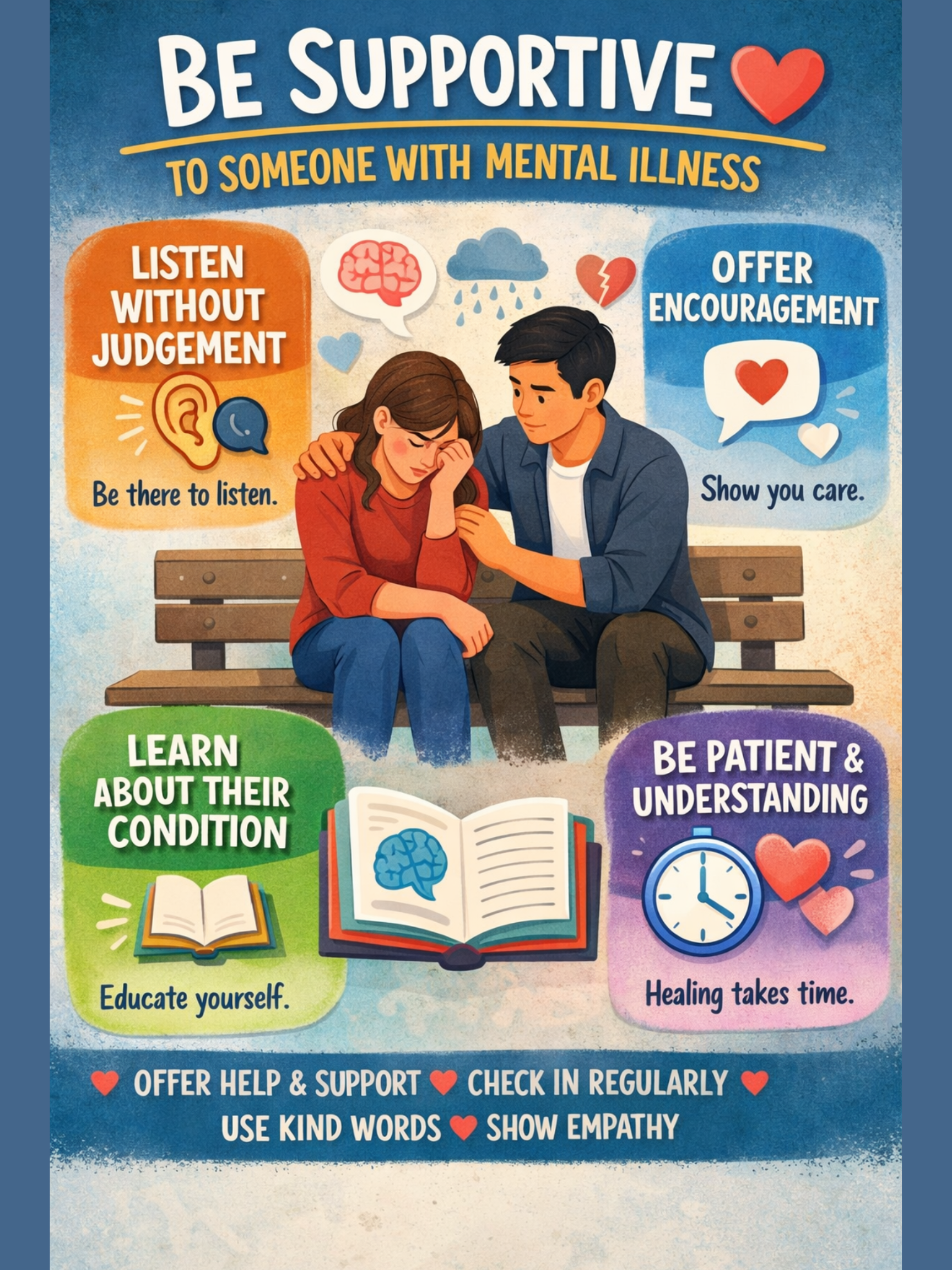
Living with someone who has a mental illness
-
NAMI Family Support Group (Highly recommended clinically)
https://www.namiwa.org/support-groups
Free support groups specifically for people with a loved one experiencing mental illness
Peer-led, structured support model
Available statewide in Washington
NAMI HelpLine
Phone: 1-800-950-NAMI (6264)
Provides emotional support, education, and referrals for families and caregivers
Washington Warm Line (peer support, non-crisis)
Phone: 1-877-500-9276
Good for ongoing emotional support when not in immediate crisis
SAMHSA Family Coping Resources
https://www.samhsa.gov/mental-health/children-and-families/coping-resources
Education on helping loved ones with mental illness
Emphasizes family support as a major factor in recovery and stabilization
Crisis Connections Resource Database (Washington-specific)
https://www.crisisconnections.org/
Directory of over 5,000 services and 1,500 agencies
Includes housing, crisis stabilization, and behavioral health services
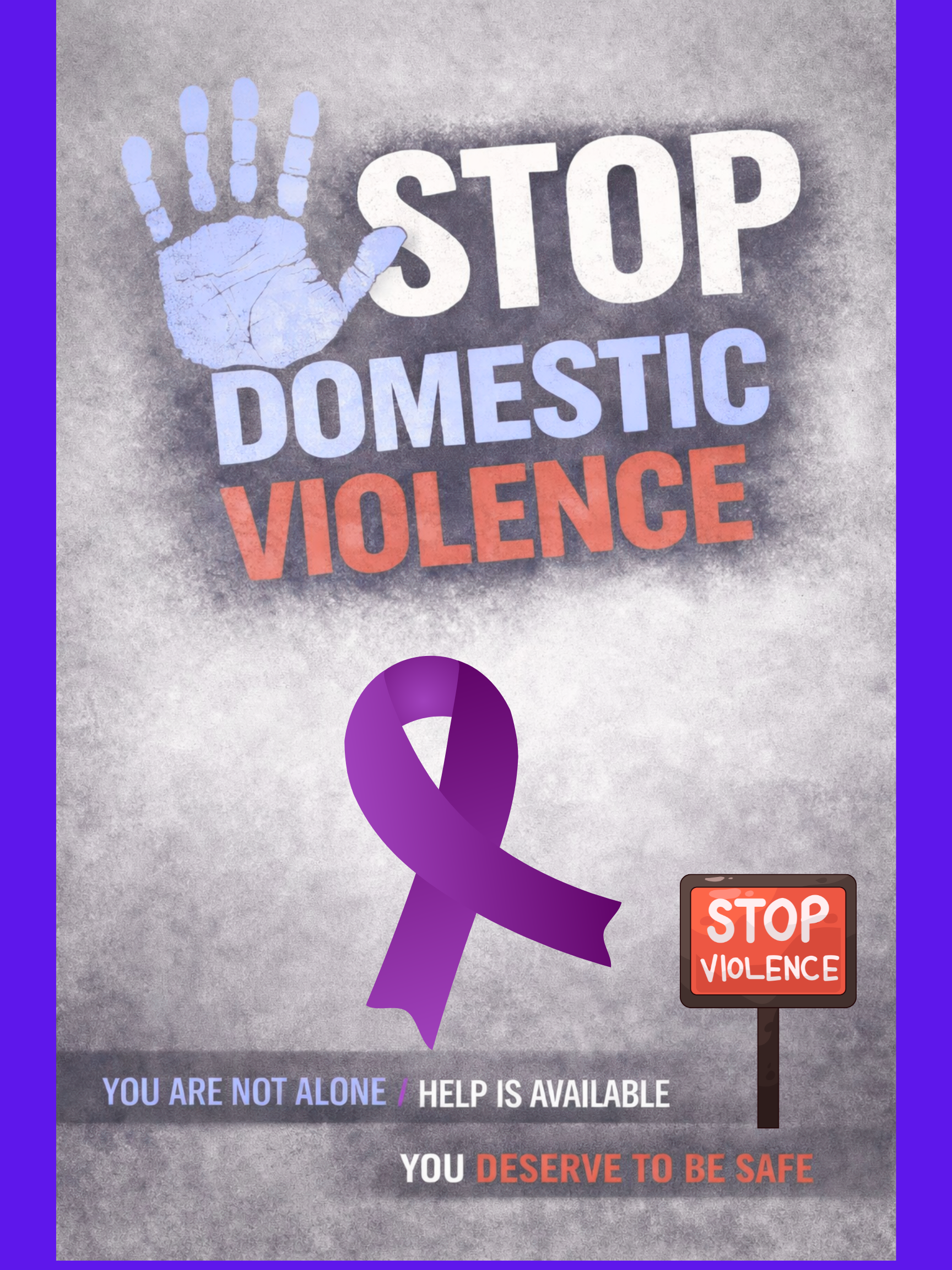
Domestic Violence
-
Pierce County Tacoma area
Crystal Judson Family Justice Center (Tacoma)
Phone: 253-798-4166
Provides:
Domestic violence advocacy
Legal assistance
Protection order support
Safety planning
Counseling referrals
One of the best local integrated support centers
YWCA Pierce County Domestic Violence Services
24-hour hotline: 253-383-2593
Provides:
Emergency shelter
Legal advocacy
Safety planning
Support groups
Housing assistance
• Call the National Domestic Violence Hotline at 1-800-799-7233 anytime
• Contact the YWCA Pierce County hotline at 253-383-2593 for local support
• The Crystal Judson Family Justice Center in Tacoma can help with safety planning and legal advocacy
• If you ever feel in immediate danger, call 911
National Domestic Violence Hotline
Call: 1-800-799-SAFE (7233)
Text: START to 88788
Chat: thehotline.org
Confidential, free, available 24/7
Supports safety planning, emotional support, and shelter referrals
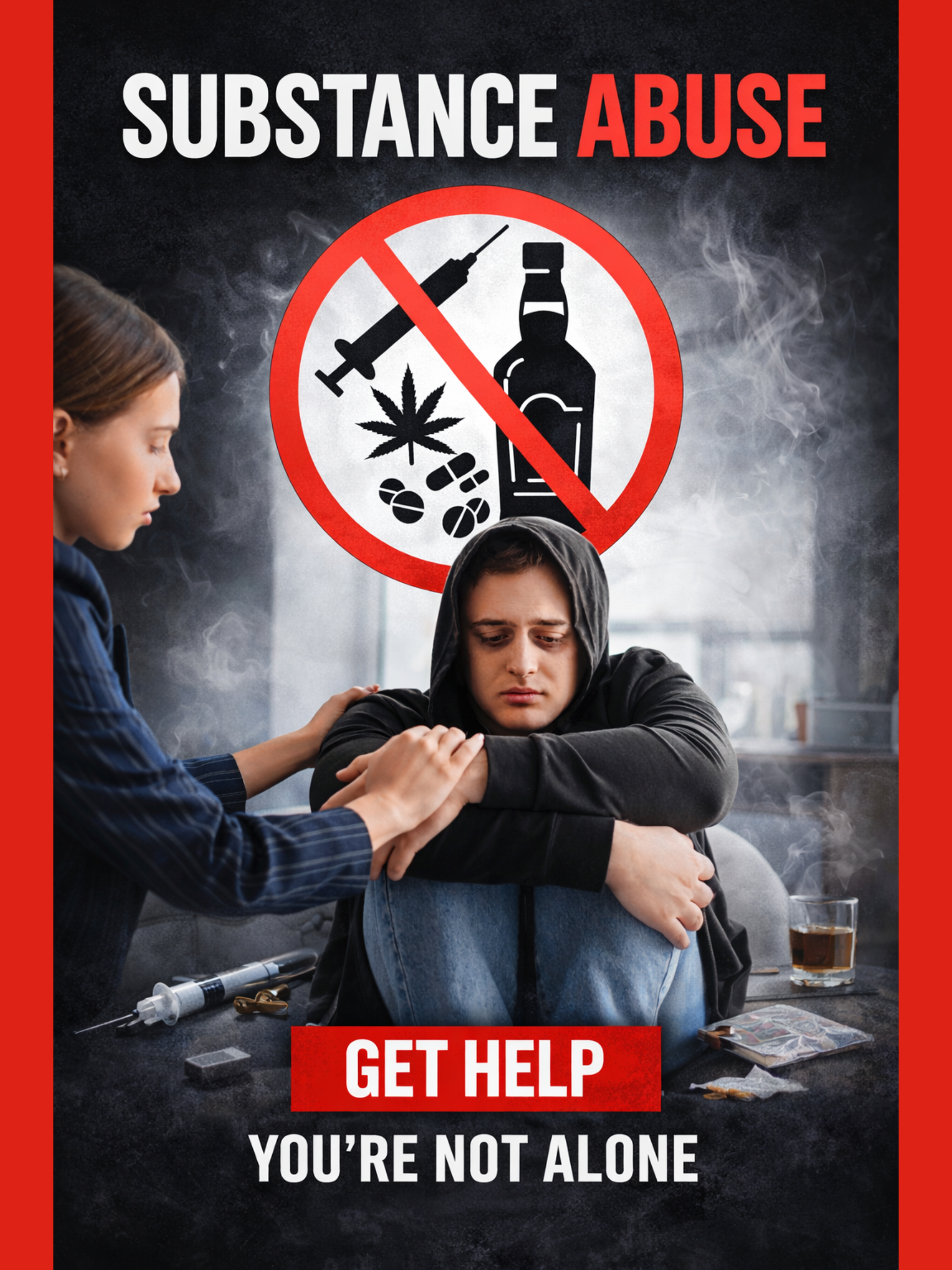
Substance Abuse
-
Detox & Medical Treatment (highest level of care)
These are best for people needing medical detox or stabilization.
Tacoma Detox Services
📍 721 Fawcett Ave #100, Tacoma
• 24/7 detox services
• Safe withdrawal support with medical supervisionSea Mar Tacoma Adult Inpatient Treatment Center
📍 1415 Center St, Tacoma
• Inpatient treatment
• Individual counseling, group therapy, and recovery planningRoyal Life Centers at Puget Sound
📍 Sumner (near Tacoma)
• Full continuum of care including detox, inpatient, and outpatient
Outpatient treatment (flexible, allows work and home life)
These are excellent for ongoing treatment and recovery support.
Bayview Recovery
📍 2156 Pacific Ave, Tacoma
• Medication-assisted treatment (Suboxone, MAT)
• Individual and group therapyNorthwest Integrated Health
📍 5929 Westgate Blvd, Tacoma
• MAT, mental health counseling, and addiction servicesIdeal Option
📍 1702 Tacoma Ave S, Tacoma
• Specializes in opioid addiction treatment and medication supportLakeside‑Milam Drug & Alcohol Rehab of Puyallup
📍 405 W Stewart Ave, Puyallup
• Highly rated outpatient treatment
• Evidence-based addiction therapy
Community recovery and peer support (very helpful alongside therapy)
These focus on community, stability, and long-term recovery.
Tacoma Recovery Cafe
📍 2201 S 19th St, Tacoma
• Peer support groups
• Recovery coaching and community connectionFresh Start House
📍 811 S 11th St, Tacoma
• Recovery housing and supportPierce County Alliance
📍 510 Tacoma Ave S, Tacoma
• Harm reduction, prevention, and recovery services
Medication-assisted opioid treatment (MAT specific)
These help with opioid use disorder (fentanyl, heroin, oxycodone, etc.)
Sound Integrated Health
📍 Tacoma
• MAT programs
• Therapy + medical care combinedCedar Wellness Center
📍 Tacoma
• Medication-assisted recovery support
Learn about different mental health issues.
-
Depression is more than feeling sad, it’s a medical condition that affects mood, thoughts, and daily functioning. It can impact anyone, regardless of age, gender, or background.
⚠️ Common Signs & Symptoms
Look out for patterns lasting 2+ weeks:
Emotional Changes:
Persistent sadness or emptiness
Hopelessness or guilt
Loss of interest or pleasure in favorite activities
Physical & Behavioral Changes:
Fatigue or low energy
Trouble sleeping (too little or too much)
Appetite or weight changes
Slowed movements or restlessness
Cognitive & Social Changes:
Difficulty concentrating or making decisions
Withdrawing from friends or family
Thoughts of death or suicide
💡 How to Support Someone
Notice & Check-In: Gently ask, “I’ve noticed you’ve seemed down—how are you feeling?”
Listen Without Judgment: Allow them to share at their own pace.
Encourage Professional Help: Suggest talking to a counselor, doctor, or therapist.
Offer Practical Support: Help with everyday tasks, encourage healthy routines.
Stay Present: Let them know they’re not alone.
🚨 When to Seek Immediate Help
If someone talks about self-harm or suicide:
Stay with them until safe.
Call 988 (Suicide & Crisis Lifeline in the U.S.)
Dial 911 if there’s immediate danger.
🌸 Remember
Depression is treatable. Early recognition and support can make a big difference.
You are not alone, and reaching out for help is a sign of strength. -
Clinical Definition of Anxiety
Anxiety is a psychological condition characterized by excessive and persistent fear, worry, or apprehension that is disproportionate to actual threat and results in clinically significant distress or impairment in social, occupational, or other important areas of functioning.
From a neurobiological perspective, anxiety involves hyperactivation of the autonomic nervous system, particularly the amygdala and threat-detection circuitry, leading to heightened arousal, increased vigilance, and impaired regulation by the prefrontal cortex. This results in exaggerated threat appraisal and reduced tolerance for uncertainty.
Core Clinical Features
Anxiety disorders commonly present with a combination of cognitive, emotional, behavioral, and physiological symptoms, including:
Cognitive: Persistent worry, rumination, catastrophic thinking, attentional bias toward threat
Emotional: Fear, apprehension, irritability, emotional dysregulation
Physiological: Muscle tension, tachycardia, gastrointestinal distress, shortness of breath, dizziness, sleep disturbance
Behavioral: Avoidance, reassurance-seeking, safety behaviors, compulsive checking, reduced engagement in valued activities
Diagnostic Considerations
Anxiety becomes clinically diagnosable when symptoms:
Persist for a defined duration (typically 6 months or more, depending on diagnosis)
Are excessive relative to situational stressors
Are not better explained by substance use, medical conditions, or another mental disorder
Cause functional impairment or significant distress
-
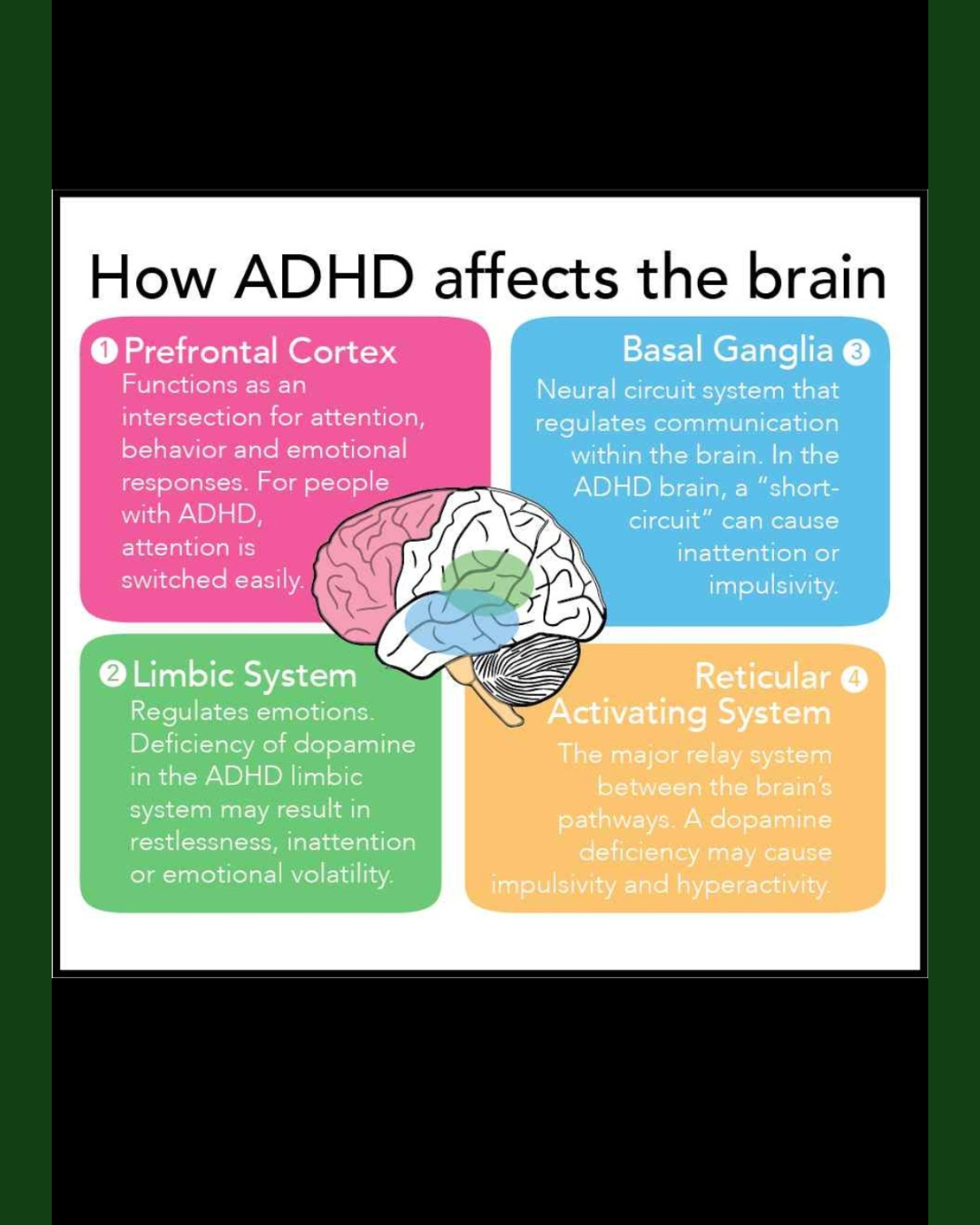
What is ADHD and how does it work?
1. What the Dopamine Pathway Normally Does
Dopamine is a neurotransmitter involved in:
Motivation (“I want to do this.”)
Reward (“That felt good. Do it again.”)
Task Initiation (the spark to get started)
Attention (staying engaged)
Emotional regulation
In a neurotypical brain, dopamine is released in steady, predictable patterns.
2. What Happens in ADHD
Research shows three major dopamine-related differences:
A. Lower baseline dopamine levels
• The brain doesn’t release dopamine as consistently
• Tasks feel harder to start
• “Boring” tasks almost feel physically impossible
• People may seek stimulation (movement, urgency, novelty)B. Slower dopamine “reuptake and release” process
• Signals don’t travel as efficiently
• The reward from completing a task doesn’t hit right away
• Can lead to feeling unmotivated even when someone cares deeplyC. Weaker response in the brain’s reward center
The mesolimbic pathway (nucleus accumbens, ventral tegmental area) is less active.
This means:
• Less “reward feeling” when finishing tasks
• Need for more stimulation to feel satisfied
• Hyperfixation when something does spark dopamine3. How This Shows Up in Real Life
These dopamine differences create what people experience as:
Task initiation struggles (“I want to do it, but I can’t make myself start.”)
Time blindness (dopamine regulates reward + time perception)
Motivation inconsistencies
Procrastination until urgency hits (dopamine spike)
Difficulty with routines (low dopamine tasks feel impossible)
Hyperfocus when dopamine finally locks on to something
Emotion intensity (dopamine interacts with the limbic system)
ADHD isn’t a motivation problem — it’s a dopamine regulation problem.
Neurotypical brain:
Dopamine drips like a steady faucet. Tasks feel doable.ADHD brain:
Dopamine comes in bursts — either too little or too much.
So the brain becomes a “novelty-seeker” to feel regulated. -
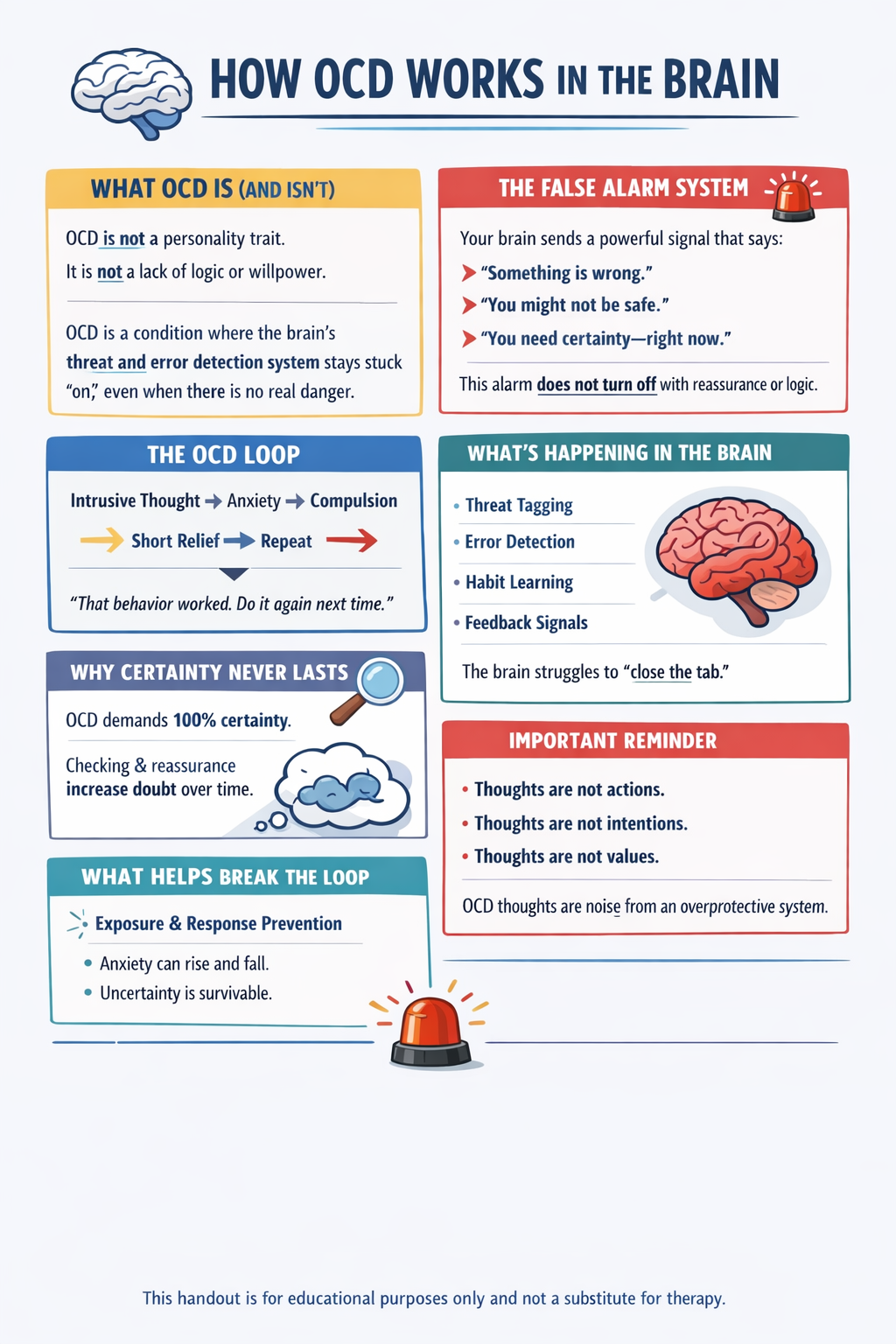
🧠 OCD: WHAT’S HAPPENING IN THE BRAIN
OCD is not a personality trait.
It’s a misfiring alarm system.🚨 The False Alarm
Your brain sends an error signal that says:
“Something is wrong.”
“You might not be safe.”
“You need certainty—right now.”
Even when logic says you’re okay, the alarm doesn’t shut off.
🔁 The OCD Loop
Thought → Anxiety → Urge → Temporary Relief → Repeat
Relief teaches the brain:
“That behavior kept us safe. Do it again.”
This is why OCD feels urgent and sticky.
🧩 The Brain Circuit Involved
(Often called the CSTC loop)
• Threat tagging: marks thoughts as important
• Error detection: keeps saying “still not right”
• Habit system: makes urges feel automatic
• Feedback loop: sends the worry back again and againThe brain struggles to “close the tab.”
❓ Why Certainty Feels Impossible
OCD demands 100% certainty in a world that can’t offer it.
Checking, reassurance, and mental reviewing actually increase doubt over time.🧠 Why Compulsions Don’t Work Long-Term
Compulsions don’t bring peace.
They bring short relief, which strengthens the cycle.Mental rituals count too:
Analyzing
Replaying memories
Reassuring yourself
Googling “just to be sure”
🔓 What Helps Break the Loop
Exposure + resisting rituals teaches the brain:
Anxiety can rise and fall on its own
Uncertainty is survivable
The alarm doesn’t need obeying
The brain relearns safety.
🤍 Important Reminder
OCD thoughts are not your values.
They are noise from an overprotective system.You are not broken.
Your brain just learned the wrong rule.Resource-
Outside Resources
Need help with groceries, housing, utilities- Click Here
Washington State Department of Youth & Family Services- Click Here

Department of Community and Human Services (DCHS)- Click Here
Washington State Department of Social and Health Services- Click Here


Childhood Sexual Development-Click here

Resources for LGBTQIA+ -Click Here

Financial & Direct support to trans folks in search for health services- Click Here
Ignite Pathways Counseling may provide links to third-party websites, articles, or external resources for informational and educational purposes. These materials remain the intellectual property of their respective owners, and Ignite Pathways Counseling does not claim ownership over such content. We share links in good faith under applicable copyright and fair use laws to help clients and visitors access helpful information. Ignite Pathways Counseling is not responsible for the content, accuracy, or privacy practices of external websites, and inclusion of a link does not imply endorsement or affiliation.